The Untold Story of Their Remarkable Rugby Revival

Saracens’ Journey Back: More Than Just Redemption
Saracens’ return to prominence in Premiership Rugby has been a compelling narrative, marked by both on-field brilliance and the lingering shadow of past controversies. The club’s ability to not only regain its competitive edge but also to foster a culture of accountability and transparency has been instrumental in its revival. This analysis delves into the key player performances and tactical adjustments that have defined Saracens’ resurgence, moving beyond simplistic narratives of redemption to examine the concrete factors driving their success.
The Farrell Factor: Leadership and Evolution
Owen Farrell remains the linchpin of Saracens’ attack and leadership structure. His influence extends far beyond his goal-kicking prowess; he is the on-field conductor, dictating the tempo and orchestrating attacking plays. Critically, Farrell’s game has evolved. While his physicality and defensive commitment remain unwavering, his decision-making under pressure has demonstrably improved. He’s become more adept at identifying mismatches, releasing the ball earlier to supporting runners, and varying his attacking options.
Farrell’s ability to read the game is exceptional. He consistently makes the right calls, whether it’s kicking for territory, going through the hands, or taking the ball into contact himself. His partnership with scrum-half Aled Davies has also flourished, providing Saracens with a dynamic half-back pairing capable of controlling the game from the base of the ruck. The understanding between them is palpable, allowing for quick and accurate distribution, keeping defenses on their toes.
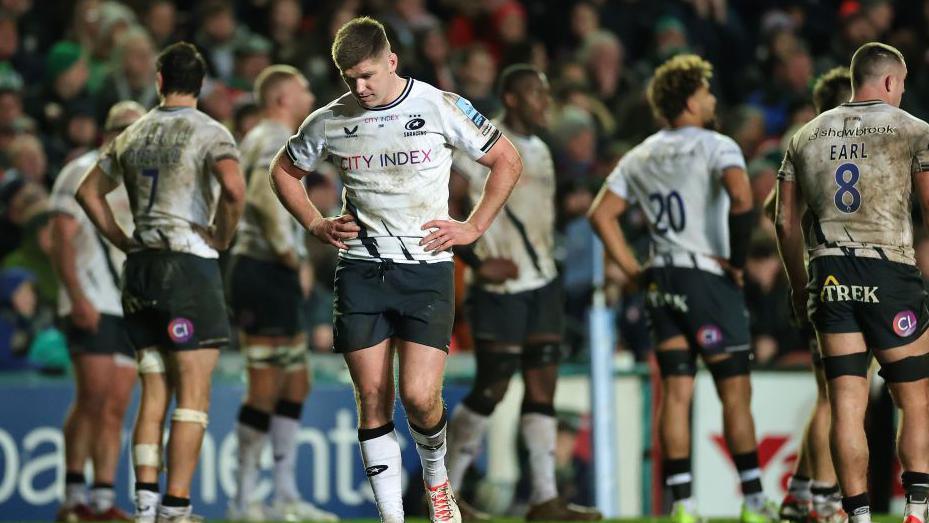
Furthermore, Farrell’s leadership extends beyond the tactical realm. He sets the standard for work ethic and commitment, inspiring his teammates to raise their own levels of performance. His influence in the dressing room is undeniable, fostering a culture of accountability and collective responsibility. This leadership has been particularly crucial in navigating the challenges of the past few years, helping the team to maintain focus and unity amidst external scrutiny.
The Itoje Enigma: A Force of Nature
Maro Itoje’s impact on Saracens’ forward pack is undeniable. His athleticism, physicality, and relentless energy make him a constant threat to opposition ball carriers and a dominant force in the lineout. Itoje’s ability to disrupt opposition attacks is unparalleled. His tackling is ferocious, and his ability to generate turnovers at crucial moments is a game-changer. He consistently puts his body on the line, making crucial defensive interventions that prevent tries and swing momentum in Saracens’ favor.
Beyond his defensive contributions, Itoje is also a potent attacking weapon. His powerful carries and impressive offloading ability make him a difficult proposition for opposing defenders. He is also a key target in the lineout, providing Saracens with a reliable source of possession. His aerial prowess and ability to win contested balls make him a valuable asset in both attacking and defensive situations.
However, Itoje’s game is not without its areas for improvement. At times, his eagerness to make an impact can lead to penalties, disrupting Saracens’ momentum. Refining his discipline and decision-making in high-pressure situations will be crucial to further elevating his game and solidifying his status as one of the world’s best players.
Emerging Talents: The Next Generation
Saracens’ success is not solely reliant on established stars like Farrell and Itoje. The emergence of young talents has been a significant factor in their resurgence. Players like Theo McFarland, Rotimi Segun, and Alex Lewington have injected pace, energy, and dynamism into the team, providing a fresh impetus to their attacking play.
Theo McFarland, in particular, has been a revelation. His athleticism and versatility allow him to play in multiple positions, providing Saracens with valuable flexibility. His powerful running and impressive offloading ability have made him a dangerous attacking threat, while his defensive work rate is equally impressive. Rotimi Segun’s blistering pace and elusive footwork have made him a nightmare for opposition defenses. He consistently beats defenders with his speed and agility, creating try-scoring opportunities for himself and his teammates. Alex Lewington’s consistent try-scoring record speaks for itself. He is a clinical finisher with a knack for being in the right place at the right time. His experience and composure under pressure make him a valuable asset to the team.
The development of these young players is a testament to Saracens’ coaching staff and their commitment to nurturing talent. By providing these players with opportunities to prove themselves at the highest level, Saracens are building a sustainable future for the club.
Tactical Evolution Under McCall: Adaptability and Innovation
Mark McCall’s tactical acumen has been crucial to Saracens’ resurgence. He has fostered a culture of adaptability and innovation, constantly tweaking the team’s game plan to exploit opposition weaknesses. Saracens’ attacking play is characterized by its variety and unpredictability. They are equally comfortable playing a power-based game, relying on their forward pack to dominate the gain line, or a more expansive game, utilizing their pace and skill in the backline.
McCall has also placed a strong emphasis on defense, building a well-organized and disciplined defensive structure that is difficult to break down. Saracens’ ability to defend as a unit, applying relentless pressure and forcing turnovers, has been a key factor in their success. Their defensive line speed is exceptional, and their tackling is consistently accurate and effective.
Furthermore, McCall has been adept at managing his squad, rotating players to keep them fresh and prevent injuries. He has also been willing to make bold selection decisions, rewarding players who perform well and holding those who underperform accountable. This has created a competitive environment within the squad, pushing players to constantly improve and strive for excellence.
Addressing the Past: Transparency and Accountability
Saracens’ journey back to the top has been intertwined with the need to address past transgressions. The club’s willingness to acknowledge its mistakes and implement changes to ensure compliance with salary cap regulations has been crucial in rebuilding trust with fans and the wider rugby community. The appointment of new leadership and the implementation of stricter governance procedures have been important steps in this process.
The club has also been proactive in engaging with fans and stakeholders, providing regular updates on its progress and addressing concerns openly and honestly. This transparency has been essential in rebuilding relationships and fostering a sense of shared purpose. The players themselves have also played a key role in this process, demonstrating humility and a commitment to upholding the values of the game.
While the past will always be a part of Saracens’ story, the club’s focus is now firmly on the future. By learning from its mistakes and embracing a culture of transparency and accountability, Saracens are determined to build a sustainable and successful future for the club.
The Road Ahead: Sustaining Success
Saracens’ resurgence has been a remarkable achievement, but the challenge now is to sustain their success. The Premiership Rugby landscape is fiercely competitive, and maintaining a consistent level of performance will require continued hard work, dedication, and innovation. The club must continue to develop young talent, refine its tactical approach, and maintain its commitment to transparency and accountability.
The competition will undoubtedly intensify, with other clubs investing heavily in their squads and striving to close the gap on Saracens. To stay ahead of the curve, Saracens must continue to evolve and adapt, constantly seeking new ways to improve and innovate. This will require a collaborative effort from players, coaches, and management, all working together towards a common goal.
Ultimately, Saracens’ success will depend on their ability to maintain their focus, discipline, and unity. By staying true to their values and continuing to strive for excellence, Saracens can cement their place as one of the leading clubs in Premiership Rugby and beyond.
FAQ Section
How did Saracens address the salary cap scandal?
Saracens acknowledged their mistakes, implemented stricter governance procedures, and engaged with fans and stakeholders to rebuild trust. They also accepted the penalties imposed by Premiership Rugby and worked to ensure compliance with salary cap regulations going forward.
What are some of the key tactical changes Mark McCall has implemented?
McCall has fostered a culture of adaptability and innovation, constantly tweaking the team’s game plan to exploit opposition weaknesses. He has also placed a strong emphasis on defense, building a well-organized and disciplined defensive structure. He’s also become adept at squad rotation to keep players fresh.
How has Owen Farrell’s game evolved in recent years?
While his physicality and defensive commitment remain unwavering, his decision-making under pressure has demonstrably improved. He’s become more adept at identifying mismatches, releasing the ball earlier to supporting runners, and varying his attacking options.
What role have young players played in Saracens’ resurgence?
Players like Theo McFarland, Rotimi Segun, and Alex Lewington have injected pace, energy, and dynamism into the team, providing a fresh impetus to their attacking play. Their emergence is a testament to Saracens’ coaching staff and their commitment to nurturing talent.
What are the biggest challenges Saracens face in sustaining their success?
The Premiership Rugby landscape is fiercely competitive, and maintaining a consistent level of performance will require continued hard work, dedication, and innovation. The club must continue to develop young talent, refine its tactical approach, and maintain its commitment to transparency and accountability. Competition from other clubs investing heavily in their squads is also a significant factor.