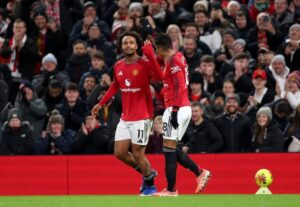
Could Marcus Rashford Transform Barcelona’s Tactics? Exploring the Potential Move from Manchester United

Marcus Rashford to Barcelona: A Tactical Crossroads
The rumor mill is churning once again, this time linking Manchester United’s Marcus Rashford with a potential move to Barcelona. While such speculation is commonplace in the world of football, this particular link warrants a deeper tactical examination. Is Rashford a good fit for Barcelona’s style of play under their new manager? What would he bring to the team that they currently lack? And what are the potential drawbacks of such a transfer? This analysis will delve into Rashford’s strengths and weaknesses, comparing them to Barcelona’s current tactical setup and identifying potential areas of synergy and conflict.
Rashford’s Strengths: A Dynamic Attacker
Marcus Rashford is, at his core, a dynamic and versatile attacker. He possesses a combination of pace, dribbling ability, and finishing prowess that makes him a threat in various attacking scenarios. His preferred position is arguably on the left wing, where he can cut inside onto his stronger right foot to shoot or combine with teammates. He also possesses the ability to play as a center-forward, offering a different profile to Barcelona’s current options.
* **Pace and Dribbling:** Rashford’s acceleration and close control allow him to beat defenders in one-on-one situations. He is adept at driving at defenses and creating space for himself and others.
* **Finishing:** While his finishing can be inconsistent at times, Rashford is capable of scoring spectacular goals. He possesses a powerful shot and is also comfortable finishing with his weaker foot.
* **Versatility:** Rashford’s ability to play in multiple positions across the front line makes him a valuable asset. He can adapt to different tactical setups and provide cover in various areas.
* **Work Rate:** Rashford is known for his willingness to track back and contribute defensively. This work rate is a valuable asset in modern football, where pressing and counter-pressing are crucial.
Barcelona’s Tactical Landscape: A Possession-Based Approach
Barcelona’s tactical identity has traditionally been built around a possession-based approach, emphasizing intricate passing patterns, positional play, and relentless pressing. While the team has evolved over the years, these core principles remain central to their philosophy. Under their new manager, the focus has been on restoring this identity while also adding more directness and dynamism to their attacking play.
* **Positional Play (Positional Juego):** Barcelona aims to control possession and create numerical advantages in key areas of the pitch. Players are expected to maintain specific positions and rotate intelligently to create passing lanes and disrupt the opposition’s defensive structure.
* **Pressing:** Barcelona employs a high-pressing system, aiming to win the ball back quickly in the opponent’s half. This requires coordinated movement and relentless effort from all players.
* **Attacking Width:** Barcelona typically utilizes wide players to stretch the opposition’s defense and create space for central midfielders and forwards.
* **Central Midfield Dominance:** The central midfield is the engine room of Barcelona’s team, responsible for dictating the tempo of the game and controlling possession.
Rashford’s Potential Fit at Barcelona: Areas of Synergy
Rashford’s skill set aligns with Barcelona’s tactical approach in several key areas. His pace and dribbling ability would provide a much-needed injection of dynamism into Barcelona’s attack, which has sometimes been criticized for being too predictable. His willingness to work hard defensively would also be a valuable asset in Barcelona’s pressing system.
* **Left-Wing Role:** Rashford’s preferred position on the left wing is an area where Barcelona could potentially use an upgrade. While they have talented players in this position, Rashford’s directness and goal-scoring threat could provide a different dimension to their attack.
* **Pressing Ability:** Rashford’s work rate and willingness to press would make him a good fit for Barcelona’s high-pressing system. He is capable of winning the ball back in advanced areas and creating counter-attacking opportunities.
* **Versatility:** Rashford’s ability to play as a center-forward could also be useful for Barcelona, providing cover and competition for their current striker options.
Potential Challenges: Areas of Conflict
Despite the potential synergies, there are also potential challenges that could arise from Rashford’s transfer to Barcelona. His inconsistent finishing and tendency to make poor decisions in the final third could be frustrating for Barcelona fans, who are accustomed to seeing their attackers be clinical in front of goal. Furthermore, his positional discipline and tactical awareness would need to improve in order to fully integrate into Barcelona’s complex positional play system.
* **Positional Discipline:** Barcelona’s positional play system requires players to maintain specific positions and rotate intelligently. Rashford’s tendency to drift out of position could disrupt Barcelona’s tactical structure.
* **Decision-Making:** Rashford’s decision-making in the final third can be inconsistent at times. He sometimes rushes his shots or makes poor passes, which can lead to wasted opportunities.
* **Finishing Consistency:** While capable of scoring spectacular goals, Rashford’s finishing can be inconsistent. He needs to improve his composure and accuracy in front of goal.
* **Adapting to La Liga:** The pace and physicality of La Liga are different from the Premier League. Rashford would need time to adapt to the new environment and adjust his game accordingly.
Tactical Adjustments: How Barcelona Could Accommodate Rashford
To maximize Rashford’s potential at Barcelona, the coaching staff would need to make certain tactical adjustments. This could involve simplifying his role, giving him more freedom to express himself, or focusing on improving his positional discipline and decision-making.
* **Simplified Role:** Barcelona could simplify Rashford’s role, allowing him to focus on his strengths: running at defenders, creating space, and shooting.
* **Positional Coaching:** The coaching staff could work with Rashford to improve his positional discipline and tactical awareness. This could involve specific drills and tactical sessions focused on understanding Barcelona’s positional play system.
* **Decision-Making Training:** Rashford could benefit from training sessions focused on improving his decision-making in the final third. This could involve analyzing video clips of his performances and working on identifying better passing and shooting opportunities.
* **Integration into the Pressing System:** Barcelona would need to integrate Rashford into their pressing system, teaching him the specific triggers and movements required to win the ball back quickly.
Alternative Tactical Formations
Barcelona typically plays in a 4-3-3 formation, but other formations could potentially be used to accommodate Rashford’s strengths.
* **4-2-3-1:** This formation would allow Rashford to play as a left-winger with more freedom to roam and cut inside. It would also provide more defensive cover in midfield.
* **3-4-3:** This formation would allow Rashford to play as a wide forward in a more attacking system. It would require him to be disciplined defensively, but it would also give him more opportunities to get into goal-scoring positions.
* **4-4-2:** While less common for Barcelona, a 4-4-2 could see Rashford partnered with another striker, allowing him to utilize his pace and movement off the ball.
The Financial Implications
Beyond the tactical considerations, the financial implications of signing Rashford would also need to be carefully considered. His transfer fee and wages would likely be substantial, and Barcelona would need to ensure that the deal is financially viable. Barcelona’s well-documented financial difficulties mean they would need to be very strategic in how they approach this potential transfer.
Conclusion: A Gamble Worth Taking?
Ultimately, whether or not Marcus Rashford would be a success at Barcelona depends on a variety of factors. His talent and potential are undeniable, but he would need to adapt to Barcelona’s tactical system and improve his consistency. If Barcelona are willing to invest the time and effort to develop him, he could become a valuable asset. However, if they are expecting him to be an instant superstar, they may be disappointed. The transfer represents a calculated gamble, with the potential for a high reward, but also a significant risk. Only time will tell if it is a gamble worth taking.
FAQ Section
Would Marcus Rashford be a guaranteed starter at Barcelona?
No, a starting position for Marcus Rashford at Barcelona is not guaranteed. While he possesses undeniable talent and the potential to significantly contribute to the team, he would face competition from existing players and would need to adapt to Barcelona’s tactical system to earn a regular spot in the starting eleven. His performance in training and matches, as well as his ability to integrate into the team’s style of play, would ultimately determine his playing time.
What specific areas of his game would Rashford need to improve to succeed at Barcelona?
To succeed at Barcelona, Marcus Rashford would need to focus on improving his positional discipline, decision-making in the final third, and consistency in finishing. Barcelona’s tactical system relies heavily on positional play, requiring players to maintain specific positions and rotate intelligently. Rashford’s tendency to drift out of position could disrupt the team’s structure. Additionally, he needs to refine his decision-making in the final third, making better choices about when to shoot, pass, or dribble. Finally, improving his finishing consistency would be crucial for him to become a reliable goal-scorer for Barcelona.
How would Rashford’s arrival affect the playing time of other Barcelona attackers?
The arrival of Marcus Rashford at Barcelona would likely impact the playing time of other attackers, particularly those who play in similar positions. Depending on the tactical setup and the manager’s preferences, some players might see their playing time reduced as Rashford is integrated into the team. However, it could also lead to increased competition for places, potentially pushing all attackers to perform at a higher level. The specific impact on each player’s playing time would depend on various factors, including their form, fitness, and ability to adapt to different roles within the team.
Is Barcelona’s current financial situation a major obstacle to signing Rashford?
Yes, Barcelona’s well-documented financial situation is a significant obstacle to signing Marcus Rashford. The club has been grappling with substantial debt and financial constraints in recent years, which has limited their ability to spend freely in the transfer market. Acquiring Rashford would likely require a significant transfer fee and a substantial wage package, which could strain Barcelona’s already stretched finances. The club would need to carefully assess the financial implications of the deal and potentially explore creative solutions, such as player sales or loan arrangements, to make the transfer feasible.
What are some realistic alternative clubs for Rashford if the Barcelona move doesn’t materialize?
If a move to Barcelona doesn’t materialize, several other clubs could be realistic alternatives for Marcus Rashford. Clubs in the Premier League, such as Liverpool or Chelsea, could be potential destinations, as they possess the financial resources and the ambition to compete for major trophies. Paris Saint-Germain in Ligue 1 could also be an option, offering him the opportunity to play alongside some of the world’s best players and compete for the Champions League. Ultimately, the specific alternative clubs would depend on Rashford’s preferences, his agent’s negotiations, and the interest shown by various clubs in acquiring his services.