A Costly Mistake in Morocco’s AFCON Dreams

.wp-block-image {
margin: 2em 0;
border-radius: 12px;
overflow: hidden;
box-shadow: 0 4px 15px rgba(0, 0, 0, 0.1);
transition: transform 0.3s ease, box-shadow 0.3s ease;
}
.wp-block-image:hover {
transform: translateY(-5px);
box-shadow: 0 8px 25px rgba(0, 0, 0, 0.15);
}
.wp-block-image img {
display: block;
width: 100%;
height: auto;
object-fit: cover;
}
.wp-block-image figcaption {
margin-top: 1em;
text-align: center;
font-style: italic;
color: #666;
}
@media (max-width: 768px) {
.wp-block-image {
margin: 1.5em 0;
}
}

.ivantweb-toc-container {
margin: 2rem 0;
font-family: -apple-system, BlinkMacSystemFont, “Segoe UI”, Roboto, Oxygen-Sans, Ubuntu, Cantarell, “Helvetica Neue”, sans-serif;
}
.ivantweb-toc-wrapper {
background: rgba(255, 255, 255, 0.85);
border: 1px solid rgba(0, 0, 0, 0.1);
border-radius: 12px;
padding: 1.8rem;
box-shadow: 0 4px 15px rgba(0, 0, 0, 0.05);
backdrop-filter: blur(10px);
transition: all 0.3s ease;
}
.ivantweb-toc-wrapper:hover {
box-shadow: 0 6px 20px rgba(0, 0, 0, 0.08);
transform: translateY(-2px);
}
.ivantweb-toc-header {
font-size: 1.6em;
font-weight: 600;
margin-bottom: 1.2rem;
color: #2c3e50;
text-align: left;
border-bottom: 2px solid rgba(0, 0, 0, 0.1);
padding-bottom: 0.8rem;
position: relative;
}
.ivantweb-toc-header::after {
content: “”;
position: absolute;
bottom: -2px;
left: 0;
width: 50px;
height: 2px;
background: linear-gradient(to right, #3498db, #2ecc71);
transition: width 0.3s ease;
}
.ivantweb-toc-wrapper:hover .ivantweb-toc-header::after {
width: 100%;
}
.ivantweb-toc-list {
list-style: none;
padding: 0;
margin: 0;
direction: ltr;
}
.ivantweb-toc-list li {
margin: 0.8rem 0;
padding-left: 1.5rem;
position: relative;
transition: all 0.3s ease;
}
.ivantweb-toc-list li::before {
content: “◆”;
position: absolute;
left: 0;
color: #3498db;
font-size: 0.8em;
top: 50%;
transform: translateY(-50%);
transition: all 0.3s ease;
}
.ivantweb-toc-list li:hover::before {
color: #2ecc71;
transform: translateY(-50%) rotate(180deg);
}
.toc-number {
color: #3498db;
font-weight: 600;
margin-left: 0.8rem;
transition: color 0.3s ease;
}
.source-link {
display: flex;
align-items: center;
color: #2c3e50;
text-decoration: none;
padding: 0.8rem;
background: rgba(255, 255, 255, 0.7);
border-radius: 8px;
transition: all 0.3s ease;
}
.source-link:hover {
background: rgba(240, 244, 248, 0.9);
color: #3498db;
transform: translateX(-5px);
}
@media (max-width: 768px) {
.ivantweb-toc-wrapper {
padding: 1.2rem;
}
.ivantweb-toc-header {
font-size: 1.4em;
}
.source-link {
padding: 0.6rem;
}
}
The Agony of a Panenka: Brahim Diaz’s AFCON Heartbreak
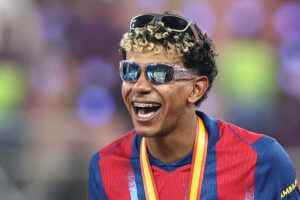
The Africa Cup of Nations (AFCON) is a stage where heroes are made and dreams realized. It’s also a place where individual errors can have devastating consequences, etching themselves into the collective memory of a nation. For Brahim Diaz, the semi-final of the 2027 AFCON will forever be a painful reminder of a bold decision gone wrong. His attempted Panenka penalty, a chip down the middle of the goal, not only failed but arguably cost Morocco a place in the final. The image of Diaz, visibly distraught and in tears, resonated far beyond the stadium, highlighting the immense pressure and emotional investment that comes with representing one’s country on such a grand stage.
The Context: A Nation’s Expectations
Morocco entered the AFCON tournament with high expectations. Following their historic semi-final run at the 2022 FIFA World Cup in Qatar, the “Atlas Lions,” led by coach Walid Regragui, were considered strong contenders for the title. The squad boasted a blend of experienced veterans and exciting young talents, including the likes of Achraf Hakimi, Youssef En-Nesyri, and of course, Brahim Diaz. Diaz, in particular, had become a key figure in the attacking lineup, bringing creativity, flair, and an eye for goal. His decision to represent Morocco, despite being eligible for Spain, had been celebrated by Moroccan fans, who saw him as a symbol of the team’s ambition and future. The weight of these expectations undoubtedly played a role in the pressure cooker environment of the semi-final penalty shootout.
The Penalty: A Moment of High Stakes
Penalty shootouts are inherently dramatic, a test of nerve and skill under immense pressure. Each kick can swing the momentum, turning heroes into villains and vice versa. When Brahim Diaz stepped up to take his penalty, the score was delicately balanced. The tension in the stadium was palpable, a mix of hope and anxiety hanging in the air. Instead of opting for a powerful strike or a well-placed side-footed shot, Diaz chose to attempt a Panenka, a high-risk, high-reward technique that involves chipping the ball gently down the middle of the goal, relying on the goalkeeper to dive to one side.
Unfortunately for Diaz, the gamble backfired spectacularly. His chip lacked conviction and height, allowing the goalkeeper to recover and make a comfortable save. The miss not only squandered Morocco’s advantage but also shifted the momentum decisively in favor of their opponents. The subsequent penalties only compounded the agony, as Morocco ultimately lost the shootout and saw their AFCON dreams dashed.
Analyzing the Decision: Why the Panenka?
The immediate reaction to Diaz’s missed penalty was one of disbelief and frustration. Why would a player choose such a risky technique in such a crucial moment? There are several factors that might have influenced his decision.
* **Confidence and Arrogance:** The Panenka is often seen as a sign of supreme confidence, even arrogance. Diaz might have believed in his ability to execute the technique flawlessly, wanting to demonstrate his skill and composure under pressure. However, overconfidence can be a dangerous thing, leading to misjudgment and poor execution.
* **Reading the Goalkeeper:** Penalty takers often try to anticipate the goalkeeper’s movement, looking for clues that might indicate which way they are likely to dive. Diaz might have thought he had read the goalkeeper correctly, anticipating a dive to one side and leaving the middle of the goal open. However, goalkeepers are increasingly adept at disguising their intentions, making it difficult to predict their movements.
* **Pressure and Nerves:** Despite his confidence, Diaz was undoubtedly feeling the pressure of the moment. The weight of expectations, the importance of the match, and the knowledge that his penalty could determine the outcome would have all contributed to his nerves. This pressure could have affected his decision-making and execution, leading to a poorly executed Panenka.
* **Psychological Warfare:** The Panenka can also be seen as a form of psychological warfare, designed to unsettle the goalkeeper and gain a mental edge. By attempting such an audacious technique, Diaz might have been trying to intimidate the goalkeeper and make him doubt his own abilities. However, this strategy can backfire if the execution is not perfect, as it did in this case.
The Aftermath: Criticism and Support
The aftermath of Diaz’s missed penalty was predictable. He faced a barrage of criticism from fans and pundits alike, who questioned his decision-making and accused him of being selfish and irresponsible. Social media was flooded with memes and comments mocking his failed Panenka, highlighting the unforgiving nature of online discourse.
However, Diaz also received a significant amount of support from his teammates, coaches, and fellow professionals. Walid Regragui, the Moroccan coach, publicly defended Diaz, emphasizing his talent and importance to the team. He acknowledged that the penalty miss was a mistake but stressed that it did not define Diaz as a player or a person. Teammates rallied around Diaz, offering words of encouragement and reminding him that they were all in it together.
The support Diaz received highlights the importance of team unity and solidarity in the face of adversity. In football, as in life, mistakes are inevitable. What matters is how individuals and teams respond to those mistakes. The Moroccan team’s response to Diaz’s penalty miss demonstrated their resilience and their commitment to supporting each other through thick and thin.
Brahim Diaz’s Overall Performance: Beyond the Penalty
While the missed penalty will undoubtedly be the defining moment of Diaz’s AFCON campaign, it is important to assess his overall performance throughout the tournament. Prior to the semi-final, Diaz had been a valuable asset to the Moroccan team, contributing goals, assists, and creative play.
He had shown glimpses of his immense talent, showcasing his dribbling skills, passing range, and ability to create scoring opportunities for himself and his teammates. His work rate and commitment to the team were also evident, as he consistently tracked back to defend and contributed to the team’s overall defensive effort.
However, Diaz also faced criticism for his inconsistency and tendency to drift in and out of games. At times, he struggled to impose himself on the match, failing to make a significant impact on the attacking play. His decision-making in the final third also came under scrutiny, with some questioning his tendency to over-dribble or take unnecessary risks.
Despite these criticisms, Diaz’s overall performance at the AFCON was largely positive. He demonstrated his potential to be a key player for Morocco in the future, and his willingness to take risks and express himself on the pitch was refreshing. The missed penalty should not overshadow his contributions to the team’s campaign.
The Future for Diaz and Morocco
The AFCON semi-final defeat was a bitter pill to swallow for Morocco, but it should not derail their long-term ambitions. The team has a strong foundation in place, with a talented squad and a capable coach. They will undoubtedly learn from their mistakes and come back stronger in future tournaments.
For Brahim Diaz, the missed penalty will serve as a valuable learning experience. He will need to analyze his decision-making, work on his penalty technique, and develop the mental resilience to cope with pressure situations. He has the talent and potential to become a world-class player, but he needs to learn from his mistakes and continue to develop his game.
The future looks bright for both Diaz and Morocco. With hard work, dedication, and a commitment to continuous improvement, they can achieve great things in the years to come. The AFCON semi-final may have been a setback, but it should also serve as a motivation to strive for even greater success in the future.
Lessons Learned: The Psychology of Penalties
The drama surrounding Brahim Diaz’s penalty miss offers valuable insights into the psychology of penalty kicks, a crucial aspect of high-stakes soccer. Here are some key takeaways:
* **Pressure and Performance:** The immense pressure of a penalty shootout can significantly impact a player’s performance. Even seasoned professionals can succumb to nerves, leading to uncharacteristic mistakes.
* **The Mind Game:** Penalties are as much a mental battle as they are a test of skill. Players try to outwit goalkeepers, and vice versa, through feints, stares, and psychological tactics.
* **Risk Assessment:** Choosing a penalty technique involves a careful assessment of risk and reward. The Panenka, while potentially devastating if successful, carries a high risk of failure.
* **Resilience:** The ability to bounce back from a missed penalty is crucial. Players need to possess the mental fortitude to overcome disappointment and continue performing at their best.
* **Team Support:** The support of teammates and coaches can play a vital role in helping players cope with the pressure and aftermath of a missed penalty.
By understanding these psychological factors, players and coaches can better prepare for the challenges of penalty shootouts and improve their chances of success.
FAQ: Brahim Diaz’s Penalty and Morocco’s AFCON
Why did Brahim Diaz attempt a Panenka penalty in such a crucial moment?
Brahim Diaz’s decision to attempt a Panenka penalty likely stemmed from a combination of factors, including confidence in his ability to execute the technique, an attempt to read the goalkeeper’s movements, and potentially a desire to gain a psychological edge. However, the high-risk nature of the Panenka meant that any miscalculation or slight error in execution could lead to failure, as it did in this case.
How did the Moroccan team and coach react to Brahim Diaz’s missed penalty?
Despite the disappointment of the missed penalty, the Moroccan team and coach Walid Regragui showed strong support for Brahim Diaz. Regragui publicly defended Diaz, emphasizing his talent and importance to the team, and acknowledging that the mistake did not define him as a player. Teammates also rallied around Diaz, offering words of encouragement and reinforcing the team’s unity.
What was Brahim Diaz’s overall performance like at the AFCON tournament?
While the missed penalty will be remembered, Brahim Diaz’s overall performance at the AFCON was generally positive. He contributed goals, assists, and creative play to the team, showcasing his dribbling skills and attacking abilities. However, he also faced criticism for inconsistency and occasional lapses in decision-making. His potential to be a key player for Morocco in the future remains evident.
How will this experience affect Brahim Diaz’s future career?
The missed penalty will undoubtedly be a valuable learning experience for Brahim Diaz. He will need to analyze his decision-making, refine his penalty technique, and develop the mental resilience to cope with pressure situations. By learning from this experience, he can grow as a player and further develop his immense potential.
What are Morocco’s prospects for future international tournaments?
Despite the AFCON semi-final defeat, Morocco has a bright future in international football. The team possesses a talented squad, a capable coach, and a strong team spirit. By learning from their mistakes and continuing to develop, they can be strong contenders in future tournaments, including the next AFCON and the FIFA World Cup.
What exactly is a Panenka penalty?
A Panenka penalty is a technique where the penalty taker gently chips the ball down the middle of the goal, relying on the goalkeeper to have already committed to diving to one side. It’s named after Antonín Panenka, who famously used the technique to score the winning penalty for Czechoslovakia in the 1976 European Championship final. It’s considered a high-risk, high-reward technique, as it requires precise execution and can be easily saved if the goalkeeper anticipates it or recovers quickly.
What other factors, besides skill, contribute to success in penalty shootouts?
Besides technical skill, several psychological and strategic factors contribute to success in penalty shootouts. These include mental fortitude, the ability to handle pressure, effective pre-shot routines, reading the goalkeeper’s body language, and the element of luck. Team preparation, including practicing penalties under pressure and studying opposing goalkeepers, also plays a crucial role.